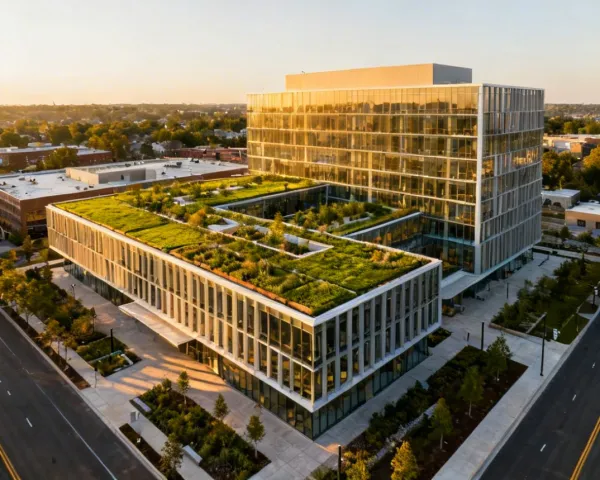
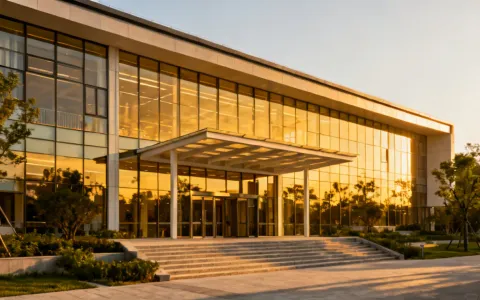
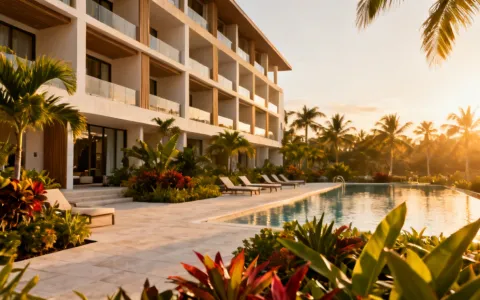
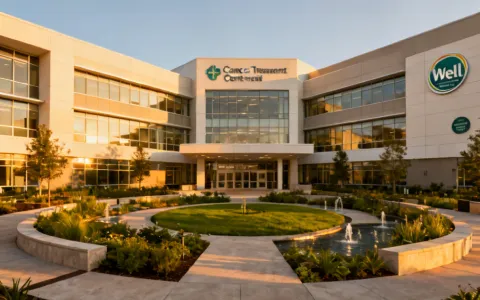
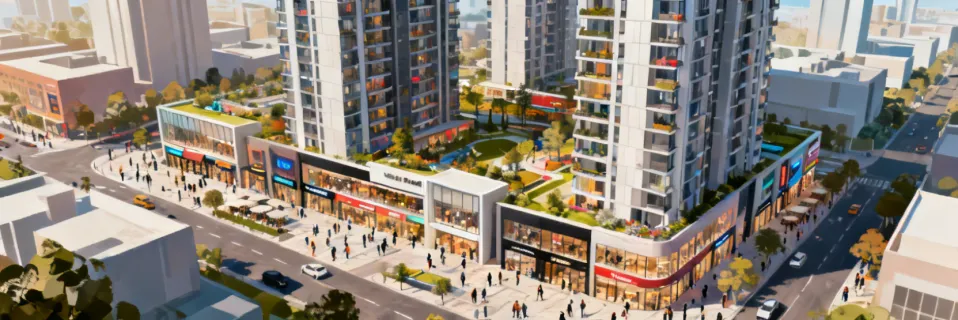
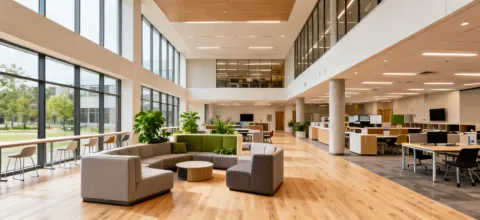
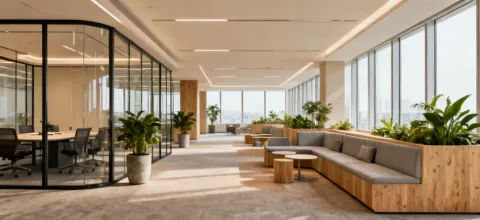
A curated view of our work across healthcare, sports, commercial, hospitality, and civic sectors — with documented performance outcomes, not just photographs.
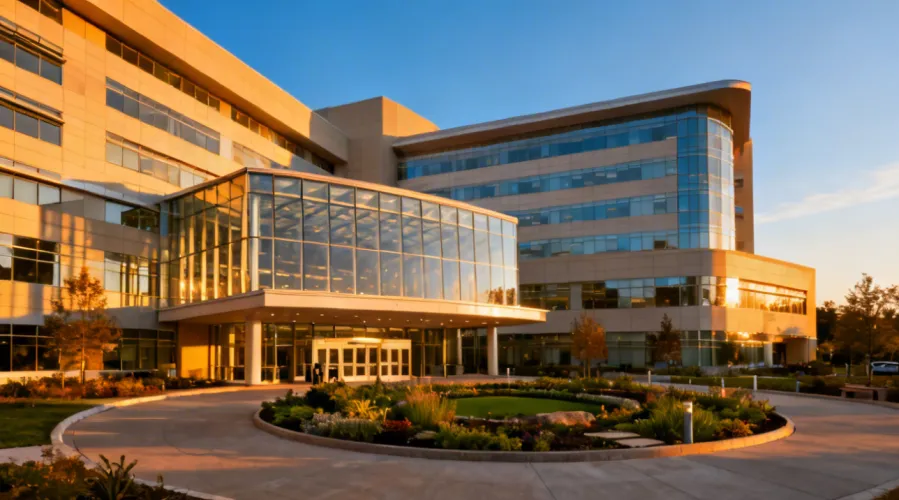
A 620,000 sq ft acute care campus designed to serve 280,000 annual patient visits with 38% lower energy consumption than ASHRAE 90.1 baseline and a documented 22% reduction in nurse walking distances compared to pre-design projections.
Interested in how HKS has approached a project type similar to yours?
Request a Tailored Portfolio ReviewSelecting an architecture firm involves trade-offs that we believe clients should evaluate with full transparency. Below is an honest comparison across the dimensions that matter most for complex B2B projects.
| Criteria | HKS Architects | Boutique Specialist Firms | Large Multi-Discipline (AEC) | Regional Full-Service Firms |
|---|---|---|---|---|
| Healthcare Design Depth | 430+ projects; proprietary post-occupancy database | Deep but narrow typology expertise; fewer cross-sector insights | Broad healthcare exposure; may lack dedicated sector studios | Limited to local or single-health-system experience |
| International Capability | 26 countries; licensed local practice in each | Typically 1–3 countries; partnership arrangements elsewhere | Strong global infrastructure but architecture may be secondary to engineering | Single-country practice; international projects via JV only |
| Sustainability Certification | 120+ LEED projects; WELL, BREEAM, Living Building Challenge | Varies — some boutique firms lead in LEED; WELL capability rare | Strong LEED volume; WELL and Living Building less common | LEED competency variable; advanced frameworks uncommon |
| Fee Range | 5–12% of construction cost (typical range by project type) | 8–15% — premium for specialization; less negotiable | 4–9% — volume pricing; may use junior staff on complex projects | 5–10% — competitive on simple typologies; higher risk on complex work |
| Research & Innovation | 12 peer-reviewed studies/year; dedicated research labs (Dallas, London) | Publication varies; some leaders; many without formal research programs | R&D budgets exist but focused on engineering/systems, not architecture | Limited to none; design decisions based on principal experience |
| Schedule Risk | Phase-by-phase schedule with explicit risk buffers; 9–36 months CD range | Principals-led process can be faster on small projects; scales poorly | Large teams enable parallel workstreams; coordination risk on complex projects | Shorter schedules on straightforward projects; may lack capacity for large programs |
| Minimum Project Scale | 5,000 sq ft renovation minimum; evaluated by complexity | No minimum; accepts residential and small commercial | Typically $10M+ construction value; small projects deprioritized | No minimum; strength on mid-scale commercial ($2M–$30M) |
Fee ranges reflect HKS's historical contract data (2020–2024) and publicly available benchmarks from RIBA and AIA fee surveys. Individual project fees depend on scope, complexity, and delivery method.
We believe informed clients make better long-term partners. These are the honest constraints and considerations any client should weigh before engaging HKS.
HKS is not the right fit for projects below approximately $3M construction value. Our overhead structure, quality control protocols, and principal-led engagement model are calibrated for complex programs. Smaller projects will find better value with regional or boutique firms where principals remain directly billable at lower rates.
Achieving LEED Gold or above involves a real cost premium of 5–15% over conventional construction, plus ongoing commissioning and operations investment. Our designs consistently outperform modeled energy targets, but only when building operators commit to the management protocols we specify. Buildings that achieve certification but revert to conventional operations will not sustain projected savings.
Our 38% average energy reduction figure is measured against ASHRAE 90.1 baseline in as-designed models, confirmed in post-occupancy audits at 12 and 24 months. However, this average masks a range of 18–55% depending on building typology, climate zone, and operator engagement. Healthcare and research lab projects consistently achieve the higher end; mixed-use retail and hospitality the lower end due to variable occupancy patterns.
In 14 of our 26 licensed countries, HKS operates through established local architecture partner arrangements rather than fully staffed offices. While we maintain design oversight and quality control protocols in all markets, permit timelines, contractor quality, and materials availability in some emerging markets create risks outside our direct control. We disclose local partner arrangements and their track records during initial project scoping.
HKS's evidence-based methodology delivers the highest ROI in building types with measurable human outcomes: hospitals (patient recovery, staff efficiency), offices (productivity, retention), and sports venues (fan experience, non-event revenue). For speculative development where the end occupant is unknown at design stage, the methodology is less directly applicable, and our fee premium for research integration may not be justified.
Our integrated BIM workflows and parametric fabrication coordination deliver measurable construction accuracy improvements — but only when the general contractor and major trade contractors operate at BIM Level 2 or above. On projects where the procurement process selects contractors based on lowest first-cost rather than BIM capability, the coordination advantage is diminished. We recommend BIM capability requirements in contractor prequalification for projects above $20M.